China Top 10 Soothing Serums When to Apply in Skincare?
Sensitive skin rarely becomes calm overnight. Redness, tightness, and stinging can appear after cleansing, weather changes, or overusing active ingredients. A soothing serum may help support the skin barrier, but it is not a universal cure. Results depend on the formula, your skin condition, and consistent use.
This guide explores China’s top 10 soothing serums and explains when to apply soothing serum in skincare routine. We assess texture, ingredient transparency, fragrance levels, packaging, and suitability for different skin types. Ingredients such as panthenol, centella asiatica, beta-glucan, allantoin, and ceramides often appear in calming formulas. However, their benefits depend on concentration and the complete product design. More ingredients do not always mean better performance.
Apply a few drops to clean, slightly damp skin. Follow with moisturizer to reduce water loss. In the morning, finish with broad-spectrum sunscreen. At night, use the serum after cleansing and before heavier creams. Patch testing remains sensible, especially when your skin feels hot or compromised. It may sound cautious. It is.
The ranking considers practical experience, published ingredient knowledge, manufacturer information, and everyday usability. Still, no list can predict every person’s reaction. I would not ignore that limitation. A serum that feels comfortable on dry cheeks may feel heavy on oily areas. If burning, swelling, or persistent irritation occurs, stop using it and seek professional medical advice. This overview aims to make your choice clearer, not to replace personalized dermatological care.
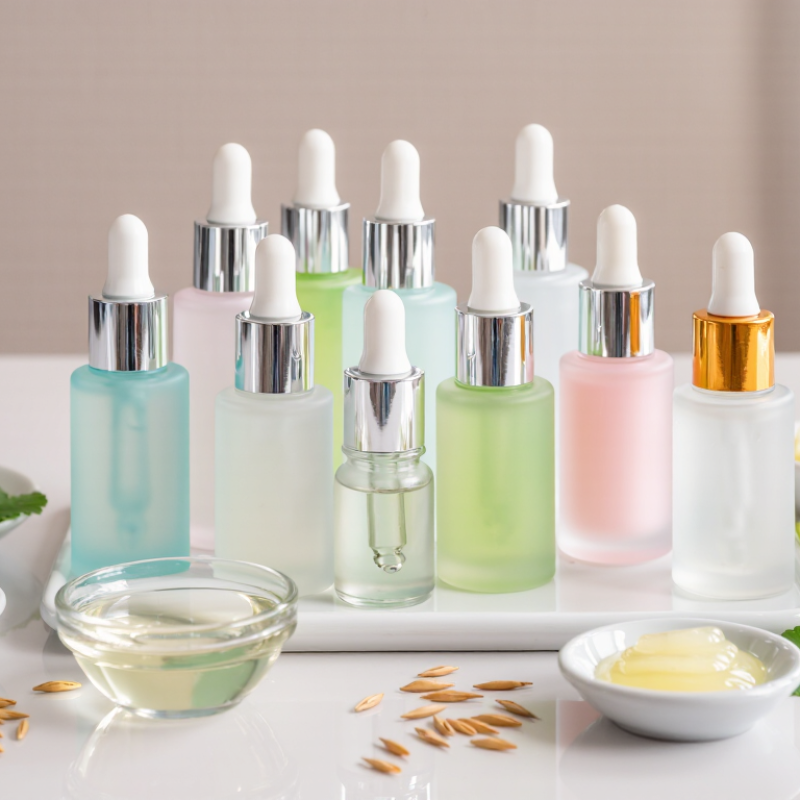
What Defines a Soothing Serum: Skin-Barrier Science and pH 4.5–5.5
A soothing serum is more than a watery product with calming language. It should support the skin barrier, which relies on corneocytes, lipids, and natural moisturizing factors. Healthy facial skin commonly sits near pH 4.5–5.5. Lambers and colleagues reported an average surface pH of about 4.7 in the International Journal of Cosmetic Science. This mildly acidic environment supports barrier enzymes and limits the growth of unwanted microbes.
Apply a soothing serum after cleansing and before moisturizer. Slightly damp skin can improve spreadability. Use it morning and evening, especially after shaving, dry weather, or carefully managed exfoliation. Look for barrier-relevant ingredients such as glycerin, panthenol, beta-glucan, ceramides, and colloidal oatmeal. Avoid assuming that every botanical extract is gentle. Natural is not automatically soothing.
My practical rule is simple: less sting, more comfort. Yet pH alone cannot prove product quality. A serum may test within 4.5–5.5 and still irritate sensitive skin through fragrance, alcohol, or excessive actives. The National Eczema Association emphasizes trigger avoidance for reactive skin, while cosmetic safety reviews stress full-formula assessment. Patch testing remains sensible. Apply a small amount behind the ear for several days. Some skin reacts late. Circana’s recent skincare reporting also shows continued consumer interest in sensitive-skin and barrier-care products, but popularity is not clinical evidence. This is where I remain cautious.
China Top 10 Soothing Serums: When to Apply in Skincare? What Defines a Soothing Serum: Skin-Barrier Science and pH 4.5–5.5
The following comparison uses ingredient functions and formulation characteristics rather than company or brand information. A soothing serum generally combines humectants, barrier-supportive lipids, skin-identical or skin-compatible ingredients, and anti-irritation agents in a formula designed to remain close to the skin’s mildly acidic surface pH.
| No. | Soothing Serum Profile | Key Functional Ingredients | Typical pH Target | Primary Barrier or Soothing Role | When to Apply | Suitable Skin Concerns | Evidence-Based Formulation Notes | Use Cautions |
|---|---|---|---|---|---|---|---|---|
| 1 | Panthenol and Beta-Glucan Hydration Serum | Panthenol, beta-glucan, glycerin, water | 4.5–5.5 | Attracts water, helps reduce dryness, and supports recovery of a stressed skin barrier. | After cleansing and toning, morning and evening; apply before moisturizer. | Dryness, tightness, temporary sensitivity, and post-cleansing discomfort. | Panthenol functions as a humectant and conditioning ingredient. Beta-glucan can provide moisturizing and film-forming benefits. | Patch-test when the skin is highly reactive; avoid layering with many potentially irritating products during a flare. |
| 2 | Centella and Madecassoside Calming Serum | Centella asiatica extract, madecassoside, glycerin, allantoin | 4.5–5.5 | Helps comfort visibly stressed skin and supports a moisturized, less reactive-feeling surface. | After cleansing, morning or evening; follow with a barrier cream. | Redness-prone, sensitized, or environmentally stressed skin. | Centella-derived compounds are widely used in soothing formulations. Allantoin is a skin-conditioning ingredient with a recognized soothing role. | Botanical extracts can still trigger individual sensitivity; discontinue if itching or burning develops. |
| 3 | Ceramide and Cholesterol Barrier Serum | Ceramides, cholesterol, fatty acids, glycerin | 4.8–5.5 | Supplies lipid components associated with the stratum corneum barrier and helps reduce moisture loss. | After water-based products, preferably morning and evening; seal with moisturizer if needed. | Flaking, rough texture, impaired barrier function, and over-cleansed skin. | Ceramides, cholesterol, and fatty acids are important components of the intercellular lipid matrix. Their performance depends on concentration, ratio, and delivery system. | A serum may not replace an occlusive moisturizer for severely dry skin; avoid assuming that every formula contains an effective lipid ratio. |
| 4 | Ectoin and Osmolyte Protection Serum | Ectoin, betaine, glycerin, sodium PCA | 4.5–5.5 | Provides water-binding and environmental-stress support without relying on strong exfoliation or retinoid activity. | After cleansing, morning and evening; useful before daytime sunscreen. | Dehydration, urban exposure, seasonal dryness, and easily uncomfortable skin. | Ectoin is a compatible solute used in cosmetic formulations for hydration and protective film-forming support. Betaine and sodium PCA are humectant ingredients. | Do not treat it as a substitute for sunscreen or medical treatment for inflammatory skin disease. |
| 5 | Colloidal Oat and Licorice Comfort Serum | Colloidal oatmeal, licorice extract, panthenol, glycerin | 4.5–5.5 | Combines moisturizing, conditioning, and comfort-focused ingredients for dry or reactive-feeling skin. | After cleansing, especially in the evening; use before a fragrance-free moisturizer. | Dryness, roughness, temporary redness, and compromised comfort. | Colloidal oatmeal is recognized for skin-protective and soothing uses. Licorice-derived compounds are commonly included in products formulated for the appearance of uneven redness. | Avoid if there is a known oat or botanical allergy; use caution on broken skin unless directed by a professional. |
| 6 | Green Tea and Caffeine Antioxidant Serum | Camellia sinensis leaf extract, caffeine, glycerin, panthenol | 4.5–5.5 | Provides antioxidant support and a lightweight conditioning layer for skin exposed to environmental stress. | Morning after cleansing; may also be used at night if well tolerated. | Dullness, environmental stress, mild puffiness, and combination skin needing a light texture. | Green tea contains polyphenols with antioxidant activity. Caffeine is often used in cosmetic formulas for a temporary refreshed appearance. | Botanical extracts may be irritating for some users; avoid applying close to the eyes unless the product is specifically designed for that area. |
| 7 | Niacinamide Barrier-Balance Serum | Low-level niacinamide, panthenol, zinc salt, glycerin | 5.0–5.5 | Supports the appearance of a balanced complexion while helping maintain moisture and barrier function. | Morning or evening after cleansing; begin once daily if the skin is sensitive. | Dehydration, excess sebum, enlarged-pore appearance, and uneven-looking tone. | Niacinamide is a well-studied cosmetic ingredient associated with barrier-supportive and sebum-balancing benefits. Lower concentrations are often better tolerated by sensitive skin. | High-strength formulas may cause flushing or stinging. Introduce gradually and avoid combining several strong active products at once. |
| 8 | Hyaluronic Acid and Polyglutamic Acid Serum | Hyaluronic acid, polyglutamic acid, glycerin, panthenol | 4.5–5.5 | Creates a water-binding layer that can temporarily improve skin suppleness and reduce the feeling of tightness. | Apply to slightly damp skin after cleansing, then follow promptly with moisturizer. | Surface dehydration, fine dehydration lines, tightness, and dry indoor environments. | Hyaluronic acid and polyglutamic acid are film-forming humectants. Occlusive products help reduce evaporation after application. | Humectants alone may feel tight in very dry climates; always seal with a suitable moisturizer. |
| 9 | Azulene and Bisabolol Comfort Serum | Azulene, bisabolol, allantoin, glycerin | 4.5–5.5 | Designed for a gentle, comfort-oriented routine when the skin feels warm, dry, or temporarily reactive. | Evening after cleansing; use in the morning only if the formula is comfortable under sunscreen. | Occasional sensitivity, dryness, and visible signs of environmental irritation. | Bisabolol and azulene are commonly used for their soothing and skin-conditioning properties in cosmetic products. | Chamomile-related ingredients may not suit people with known sensitivity to certain Asteraceae plants. |
| 10 | Postbiotic and Prebiotic Support Serum | Ferment lysate, inulin, alpha-glucan oligosaccharide, glycerin | 4.5–5.5 | Supports hydration and a skin-friendly routine while avoiding aggressive exfoliating activity. | After cleansing, morning and evening; layer with moisturizer according to dryness level. | Dryness, sensitivity caused by over-cleansing, and skin that feels easily disrupted. | Ferments and prebiotic ingredients are used to support moisturization and skin conditioning; outcomes depend on the specific ingredient and finished formula. | “Microbiome-friendly” does not guarantee suitability for every person. Patch-test and avoid fragranced versions if the skin is reactive. |
FAQS
It supports the skin barrier, which includes skin cells, lipids, and natural moisturizing factors. A soothing serum is not merely watery. Comfort matters.
Healthy facial skin commonly has a mildly acidic pH around 4.5–5.5. This range may support barrier activity. pH alone proves little.
Apply it after cleansing and before moisturizer. Slightly damp skin helps the serum spread evenly. About 60 seconds is practical, not mandatory.
Use two or three drops for the face. Press a thin layer across your cheeks, forehead, and chin. More product may create stickiness.
Glycerin, panthenol, beta-glucan, ceramides, allantoin, and colloidal oatmeal may help. Some botanical extracts can still irritate. Natural does not always mean gentle.
Patch-test a small amount behind your ear or on your inner arm. Wait 24–48 hours. Watch for burning, swelling, lasting redness, or itching.
Begin once daily, preferably at night. Increase to twice daily if your skin remains comfortable. Avoid introducing several new products together.
It may feel helpful after shaving or carefully managed exfoliation. Avoid it when the skin feels raw or burning. Strong acids and retinoids can increase sensitivity.
No. Fragrance, alcohol, and strong active ingredients may still cause irritation. I sometimes trust a soothing label too quickly. Patch testing reduces uncertainty, but cannot guarantee compatibility.
Conclusion
A soothing serum is designed to support a stressed or weakened skin barrier with calming, hydrating, and barrier-friendly ingredients. When comparing China’s top 10 soothing serums, examine the INCI list, the concentration of active ingredients, fragrance content, and the formula’s skin-friendly pH, ideally around 4.5–5.5. Ingredients that help replenish moisture and reduce the feeling of irritation may be especially useful for dry, sensitive, or environmentally stressed skin.
For the best results, cleanse gently and apply the serum within 60 seconds while the skin is still slightly damp. If you are wondering when to apply soothing serum in skincare routine, use it after cleansing and before moisturizer, followed by broad-spectrum SPF 30 or higher in the morning. Begin once daily, then increase to twice daily if your skin responds well. Always patch-test a new formula for 24–48 hours before applying it widely.
